East Bay Tai Chi
East Bay Tai Chi is my T’ai Chi Ch’uan school in Berkeley. I teach the Yang-style short form of Professor Cheng Man-ch’ing, which I’ve practiced for 26 years. It’s a martial art, a health practice, and a lifetime study of how to stand, move and relax. The form takes months to learn and decades to understand, and that second part is the interesting one.
Classes
Classes are an hour long and meet outdoors at the Berkeley Marina.
Thursdays
- Form, 11:00 am
- Push hands after class, on request
Sundays
- Form, 11:15 am
- Sword form, 12:15 pm
- Sword form videos of Professor Cheng Man-ch’ing, Ben Lo and Martin Inn, on request
Fee: your first class is free; after that it’s $20 a class.
Weather: if it’s really raining, we don’t meet. If it’s only sprinkling, we might.
New students
New students are welcome on Thursdays, Sundays or both. No experience is needed.
- The form. Over about nine months we work through all 37 movements of the Yang-style short form, one posture at a time.
- The principles. Alongside the movements you’ll learn the principles that make it T’ai Chi: balance, relaxation, rooting, and how mind and body work together.
- Twice a week. I encourage beginners to come to both classes. Regular practice is what makes the form yours.
- Practice at home. Class shows you what to practice; daily practice at home is where it takes hold. The 100-Day Foundation is a simple way to start.
Whether you’re looking for fitness, stress relief or a deeper connection with your body, you’ll find a supportive group to learn with.
Ready to try a class? Your first one is free. Email me at msb [at] markbartlett [dot] org and let me know which day you’re coming, or just show up.
Location
Classes meet on the cement pier at the Berkeley Marina, 100 University Avenue, Berkeley, California.
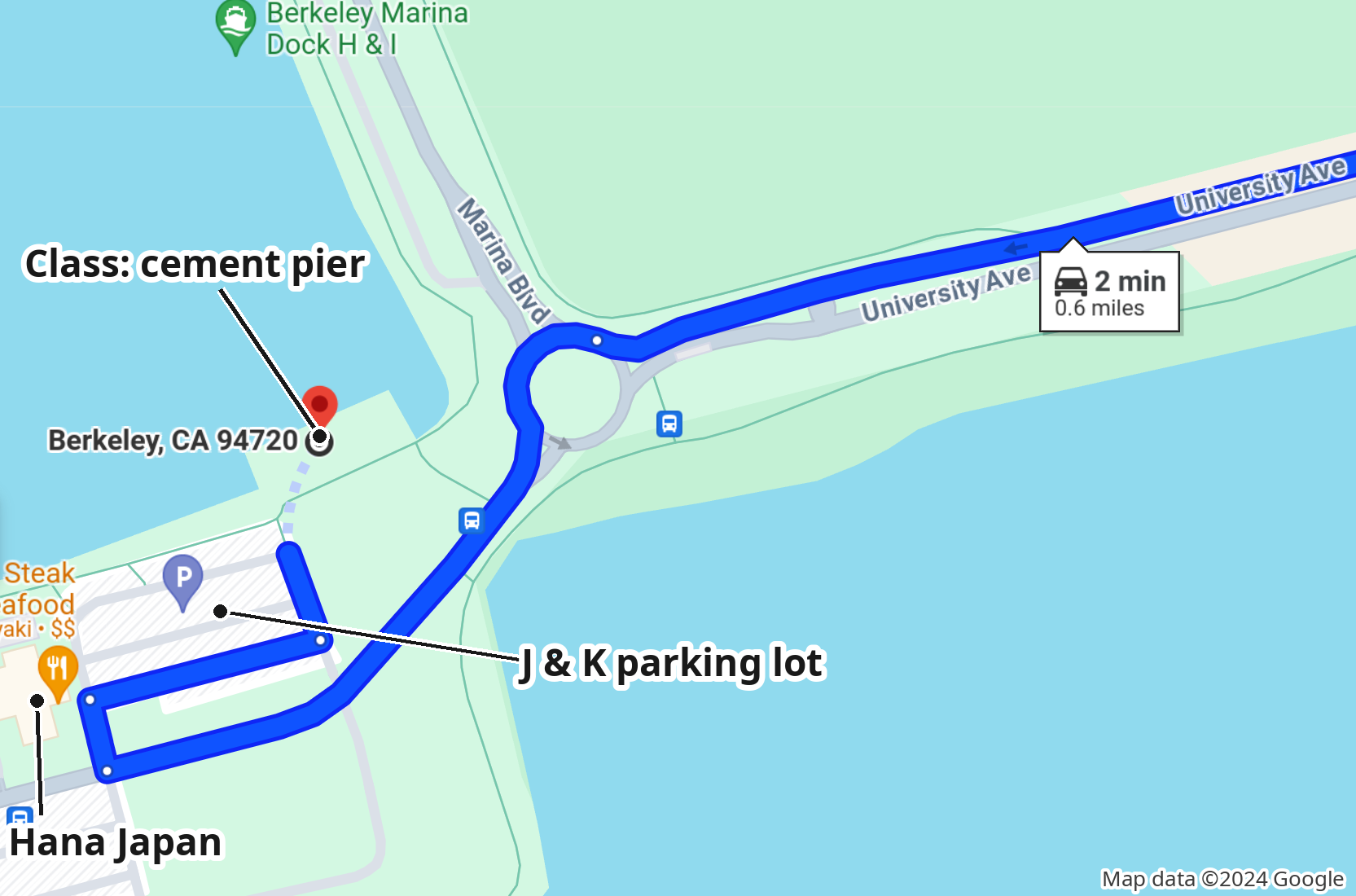
Parking: use the J & K berth parking lot at 100 University Avenue, next to the marina just east of Hana Japan restaurant. The concrete pier is at the end of the same lot, facing the marina.
What I teach
The core is the short form, taught slowly and corrected carefully, posture by posture. Alongside it we work on what makes the form T’ai Chi rather than choreography:
- Song: relaxing, sinking and releasing tension rather than holding a position.
- Zhong ding: central equilibrium, the upright, rooted structure the whole art rests on.
- Structure and jin: the body as a connected, elastic whole, moving from the ground through the legs and waist rather than from the arms.
- Yi: where attention goes, and how intention leads the movement.
For continuing students there’s also the sword form, and push hands, the two-person practice of sensitivity and balance.
Lineage
I teach in the lineage of Professor Cheng Man-ch’ing, who brought this form to the West in the 1960s. He went straight to the body: song, sinking, relaxation. Those are instructions that work without asking students to adopt a metaphysics first, and that body-first approach is the one I teach.
For the past seventeen years I’ve learned from my teacher, Martin Inn, and from the teachers and students of the Inner Research Institute, IRI Tai Chi. Whatever is worthwhile in my teaching reflects what they have patiently shown me; whatever is unclear or mistaken is mine alone. I’m still learning from them.
Books
These are the books I return to, in order of importance. None of them replaces a teacher, but each one rewards rereading as practice deepens.
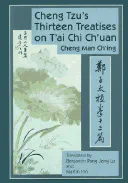 Cheng Tzu's Thirteen Treatises on T'ai Chi Ch'uan
Cheng Man-ch'ing, translated by Benjamin Lo and Martin Inn
MoreLess
Professor Cheng’s own account of the art, in thirteen short chapters on relaxation, rooting, the use of mind over strength, and the health and philosophy behind the practice. If you read only one book on T’ai Chi, read this one, then read it again in five years.
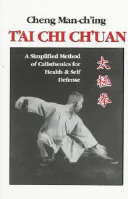 T'ai Chi Ch'uan: A Simplified Method of Calisthenics for Health & Self Defense
Cheng Man-ch'ing
MoreLess
Professor Cheng’s introduction to the short form we practice, illustrated with photographs of him in the postures. Seeing his structure, posture by posture, is a correction that never gets old.
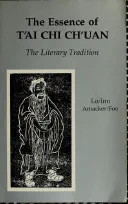 The Essence of T'ai Chi Ch'uan: The Literary Tradition
Translated by Benjamin Lo, Martin Inn, Robert Amacker and Susan Foe
MoreLess
The T’ai Chi classics, the short foundational texts every serious student studies, with the Chinese alongside the English. They’re terse, and they mean more every year you practice.
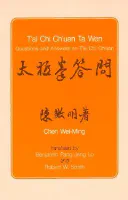 T'ai Chi Ch'uan Ta Wen: Questions and Answers on T'ai Chi Ch'uan
Chen Wei-ming, translated by Benjamin Lo and Robert W. Smith
MoreLess
Chen Wei-ming studied with Yang Cheng-fu, Professor Cheng’s teacher, and wrote down the questions students actually ask, with direct answers. Practical, short, and full of the details that make the principles usable.
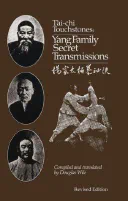 Tai Chi Touchstones: Yang Family Secret Transmissions
Douglas Wile
MoreLess
Translations of texts handed down privately in the Yang family. A window into how the art was taught before it went public, and good company for the classics.
 I Ching: The Book of Changes
The Richard Wilhelm translation, rendered into English by Cary F. Baynes
MoreLess
The standard English edition of the Book of Changes, the source of the yin and yang thinking T’ai Chi grew from. Be aware that it blends the Confucian Ten Wings commentary into the text; my paper The I Ching and T’ai Chi Ch’uan explains why that matters.
Writing
I write about the art for my students:
- The Tai Chi Body: a 45-page study of song, the jin body, the inner body, yi, qi and zhong ding.
- The I Ching and T’ai Chi Ch’uan: the Book of Changes as a map of how change works, and how its trigrams show up in the body.
- The 100-Day Foundation: a 100-day daily-practice challenge built on the old teaching that small accumulations become great results.
Contact
To join a class or ask a question, email me at msb [at] markbartlett [dot] org.